India has given the world its most ancient spiritual traditions. Its sacred objects have been cast in metal for three thousand years, by temple workshops in Thanjavur, by royal foundries in Vijayanagara, by master artisans whose names were carved into the bases of idols destined for dynasties.
प्रतिष्ठा
And yet. There is no Indian luxury house for these objects.
Three thousand years. One house.
Pratishtha (प्रतिष्ठा) is the Sanskrit word for consecration. The Vedic act of installing life, meaning, and divine presence into a sacred object. The moment a cast idol becomes a deity. The moment a metal vessel becomes a sacred instrument.
The brand does not sell objects. It creates Pratishtha.
Every product this house makes undergoes Pratishtha, not only through Vedic ritual, but through the relentless pursuit of iconometric perfection, documentary provenance, and the highest possible standard of craft.
Precision Over Abundance
Every piece is documented, proportioned to Shilpa Shastra specifications, and certified. We do not cast objects. We create evidence of a civilisation.
Consecration Over Decoration
Our objects are not décor. They carry the weight of tradition, the blessing of scripture, and the mark of a house that will outlast trends.
Scarcity Over Scale
The highest tier of this house produces fewer than twelve pieces per year. The waiting list is the product.
The Ganesha
The house launches with a single form.
Ganesha transcends regional, sectarian, and caste boundaries, the most universally beloved deity. The most logical choice for a founding house. The object every traditional HNI family already owns. Our task is to make them want a better one.
View the Collection →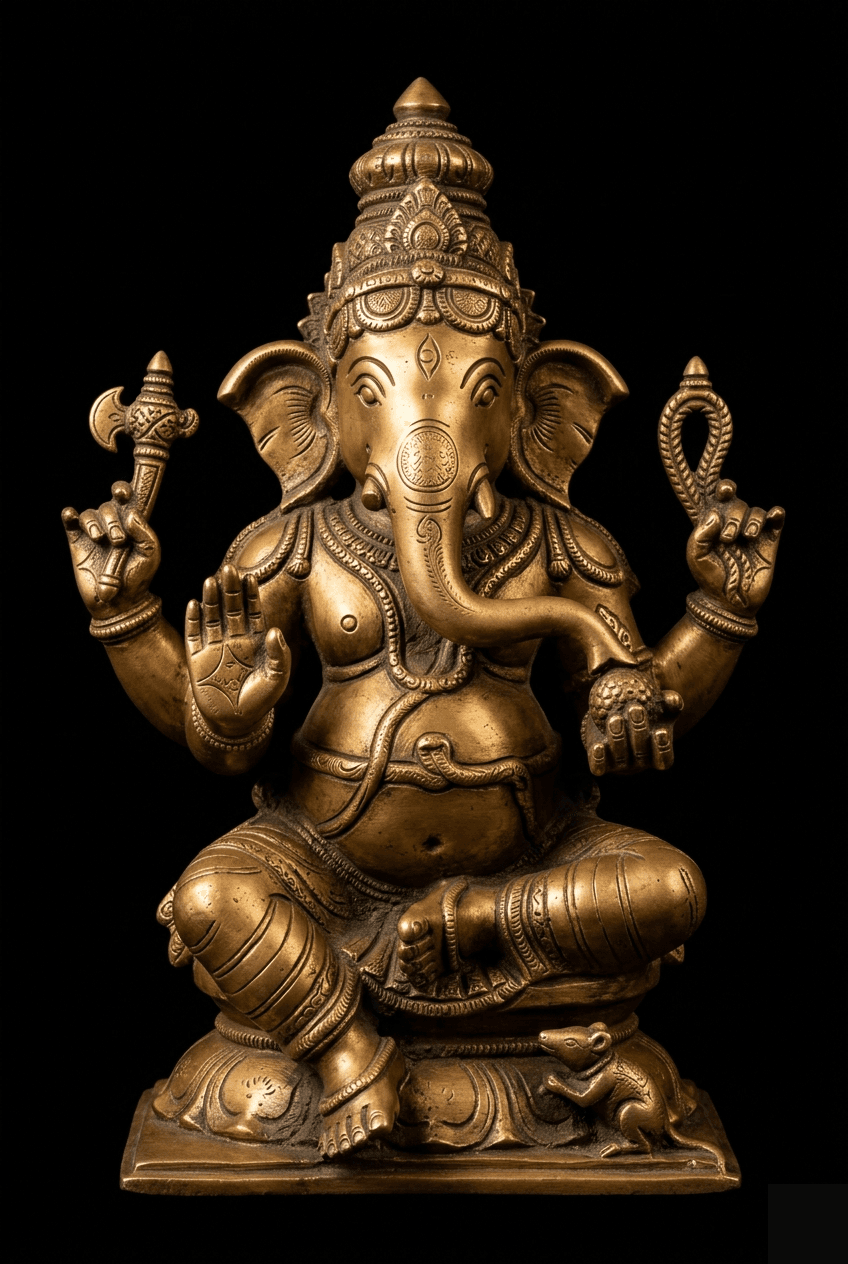
The Shilpa Shastra is the ancient Indian canon of sacred architecture and iconometry. Written between the 5th and 12th centuries CE, it prescribes the exact proportions of every sacred form: the height of a deity relative to its head, the length of each limb, the correct gesture of each hand, the precise curve of a trunk.
Every Ganesha produced by this house is made to these specifications, documented with a Shilpa Shastra Compliance Certificate signed by a Vedic scholar and issued with every piece.
This is a category-creating claim. No other brand in the market documents Shilpa Shastra compliance as a product attribute.
Read about Pratishtha →Scripture Reference
Manasara · Chapter LXI
Seated form · Four arms · Proportions of the Vinayaka
The Manasara is the primary Shilpa Shastra text for iconometry. Written circa 6th century CE. Used in temple workshops across South India for over a thousand years.